

Overview
In 2020, Pennsylvania was home to 12,807,060 children and youth from birth to age 24. Of that number, 713,023 were from birth to age five.
Early childhood education (ECE) is a complex system of programs and funding streams at the federal and state level. This tool considers how programs and funding may impact young children and families within the ECE system, beginning with federal and state agencies.
In Pennsylvania, ECE programs fall under the Office of Child Development and Early Learning (OCDEL), a collaborative effort between the Pennsylvania Department of Education (PDE) and the Pennsylvania Department of Human Services (DHS). This tool also considers funding that may impact young children and families such as health and nutrition programs.

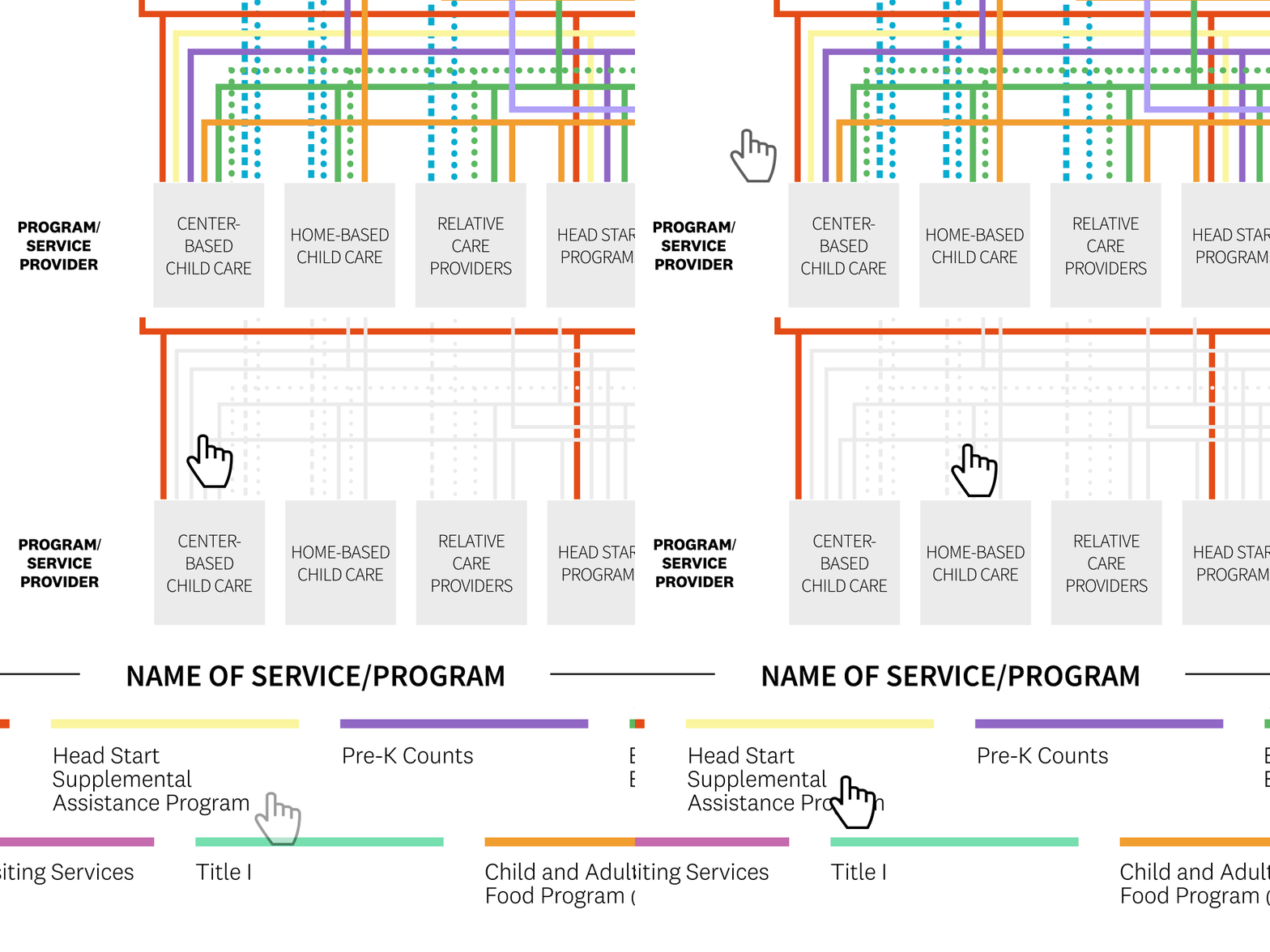
Each line represents a program/funding stream that provides services and supports integral to Pennsylvania’s ECE system. The lines are intended to provide an overview of how public dollars support young children and families, as well as the services in the ECE system, demonstrating how the money flows from federal, state, and local levels to the program level.
The following funding breakout, map, and program and service descriptions are not exhaustive of all early childhood expenditures but are intended to be a primer on the state’s complex early childhood system. More details for each program/service are provided in the program description section.

Map of Pennsylvania's Early Childhood Funding
Definitions for the Program/Service Provider
TYPES OF PROGRAM & SERVICE DESCRIPTIONS
Click for more detail
CHILD CARE
CHILD CARE (FEDERAL), CHILD CARE SERVICES, CHILD CARE ASSISTANCE
- What is the program/service?
Child Care (Federal): The Child Care Development Block Grant (CCDBG), Temporary Assistance for Needy Families (TANF), Social Services Block Grant (SSBG), and Supplemental Nutrition Assistance Program (SNAP) provide federal funding to Pennsylvania’s Child Care Works (CCW) subsidy program for children under age 13 in families with low-income.
The Child Care and Development Fund (CCDF) is a federal and state partnership program administered by states, territories, and tribes. In PA, CCDF funding is administered through the Early Learning Resources Centers (ELRCs) in order to provide financial child care assistance to families with low-income.
This funding also supports Pennsylvania's Quality Rating and Improvement System (QRIS) for early and school-age care and education programs, Keystone STARS, and licensing. The SSBG provides flexible funds to states for activities that serve vulnerable populations, and this includes supporting subsidies for child care for families with low-income. PA DHS is responsible for administering the SSBG in Pennsylvania and funding is administered through the ELRCs to provide child care subsidies to eligible families. ELRCs provide a single point-of-contact for families, early learning service providers, and communities to gain information and access services that support high-quality child care and early learning programs.
CCW subsidies help families with low-income afford quality child care. Families with an income at 200% of the Federal Poverty Level (FPL) or below and who meet the work requirements are eligible to enter the program. Based on the 2021 guidelines, a family of four making $53,000 is at 200% FPL.
The Keystone STARS program uses research-based standards focused on: staff qualifications and professional development, programming (curriculum, classroom environment), partnerships with family and community, and leadership and management (business practices). STAR 3 and 4 are considered high-quality, which only 42% of Pennsylvania child care providers meet. - Who provides the funded services?
Agencies such as local governments and nonprofit organizations administer funds to support child care providers and families through the ELRCs.
Direct child care services are provided by operators of community-based early childhood centers, home-based care, and relative care providers who receive the CCW payments and Keystone STARS support. - How much funding is there and how is it used?
In Fiscal Year (FY) 2017, there was $1.1B of federal funding for child care in PA.
Public funds supporting child care in PA come from both the federal and state government. The majority of those funds go to pay child care providers for services, including the CCW subsidy payments for eligible children enrolled. Child care funding includes items such as a base rate for programs. In addition to child care programs, child care funding supports agencies administering CCW assist with tasks such as eligibility determination and case management, as well as management of waiting lists, payments, and funds. CCDBG is the primary source of federal funding for CCW.
Child Care Services (state line item): In addition to CCW subsidy payments, this funding stream supports Keystone STARS programs through Professional Development opportunities. CCDBG is the primary source of federal funding for Keystone STARS.
In FY 2021-2022 the funding for Child Care Services was $156M.
Child Care Assistance (state line item): This funding supports CCW subsidies for families receiving TANF, former TANF and SNAP benefits. These are federally funded through TANF, SNAP, and CCDBG and also supported by the state.
In FY 2021-2022 funding for Child Care Assistance was $110M.
As of January 1, 2022, $352 million in CCDF federal American Rescue Plan Act (ARPA) funding supports lower maximum copayments for families eligible for CCW to 3-7% of family income, within the federal recommendation, and increased base reimbursement rates for providers participating in CCW to the 60th percentile compared to the private pay market rate. This change brings Pennsylvania closer to the federally-recommended 75th percentile and includes an add-on rate for providers serving CCW-eligible children during non-traditional hours. - Who benefits?
38,113 (17,988 infants and toddlers) children younger than five years are enrolled in the CCW program as of October 2020.
162,617 children eligible for CCW remain unserved as of October 2020.
The data only includes children receiving CCW, not private pay families. The state does not have reliable data on all children served in child care younger than five years. Prior to the COVID-19 pandemic, 71% of Pennsylvania children younger than age six had all adults in their household in the labor force, so many more families need child care.
Even with federal and state funding, child care is still largely a private pay industry with families paying up to nearly $12,000 annually for infant/toddler child care. Only 19% of eligible children receive CCW subsidy and the subsidy reimbursement providers receive is only 60% of the market rate (which doesn’t account for the actual cost of quality care). - Advocacy:
Start Strong PA advocates for affordable, high-quality infant and toddler child care in PA. Specific goals of this initiative include improving family access and affordability, securing sufficient payments to child care providers by paying providers in ways that reinforce stability, increase compensation for early learning professionals, and ensure accountability, oversight, and evaluation of the statewide early learning system.
SOURCES
Start Strong PA. 2021 (October). “Research — Start Strong PA.”
The Annie E Casey Foundation. 2020. “Children under age 6 with all available parents in the labor force in Pennsylvania.” Kids Count Data Center.
PA Office of the Budget. 2021. “Commonwealth Budget.” Budget.PA.gov.
Pennsylvania Partnerships for Children. 2021 (October). Start Strong PA Child Care Works Map.